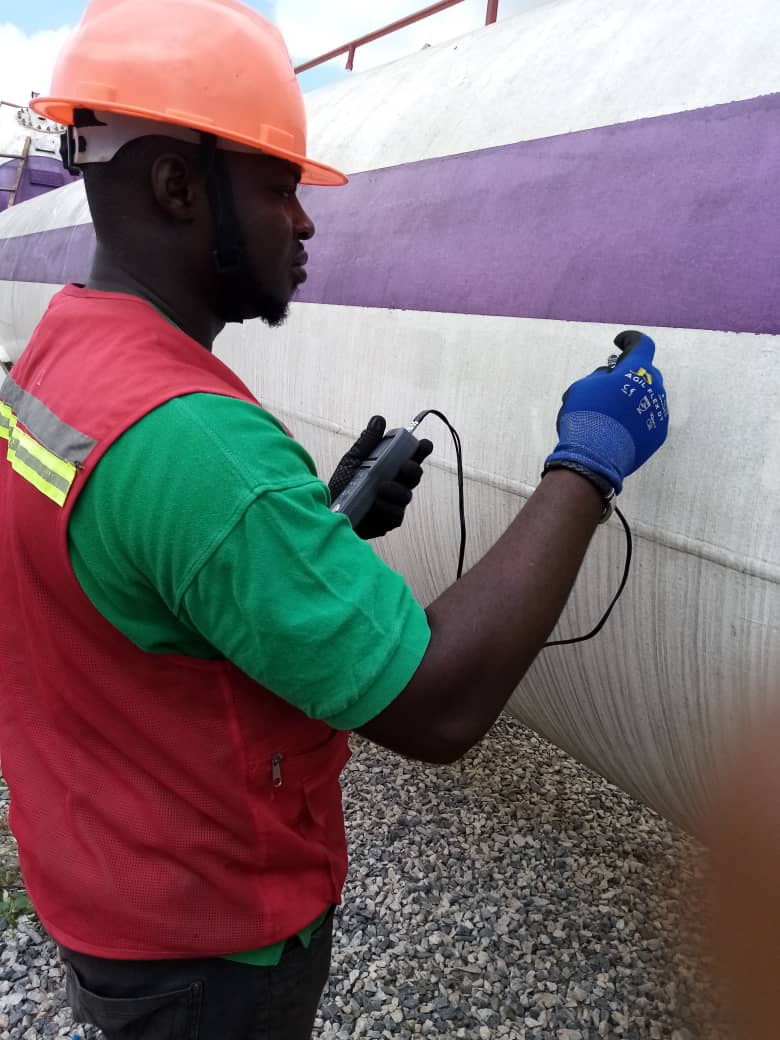
Understanding Calibration And It’s Importance
Calibration is a comparison between a known measurement (the standard) and the measurement using your instrument. Typically, the accuracy of the standard should be ten times the accuracy of the…
Radiography testing (RT) involves the use of penetrating gamma or X-radiation to examine parts and products for imperfections. It is one of the conventional NDT methods which has been in…
Ultrasonic Testing (UT) is one of the more common non-destructive testing methods performed on materials. This testing utilizes high frequency mechanical energy, i.e. high frequency sound waves, to conduct examinations…
Radiographic Testing (RT) is a non-destructive testing (NDT) method which uses either x-rays or gamma rays to examine the internal structure of manufactured components identifying any flaws or defects. In Radiography…
Email spoofing is a technique used in spam and phishing attacks to trick users into thinking a message came from a person or entity they either know or can trust.…
Over the past few years, you’ve probably noticed people talking a lot more about the importance of teamwork and collaboration. Open-office layouts have become the norm and team productivity tools…
It’s easier to succeed when you have clearly defined objectives that are based in reality. The SMART in SMART goals stands for Specific, Measurable, Achievable, Relevant, and Time-Bound. Defining these…
Non-destructive testing (NDT) is a testing and analysis technique used by industry to evaluate the properties of a material, component, structure or system for characteristic differences or welding defects and discontinuities…
There are several techniques used in Non-Destructive Test for the collection of various types of data, each requiring its own kind of tools, training, and preparation. Some of these techniques…
NDT (Non-Destructive Testing) refers to an array of inspection techniques that allow inspectors to collect data about a material without damaging it. NDT stands for Non-Destructive Testing. It refers to…