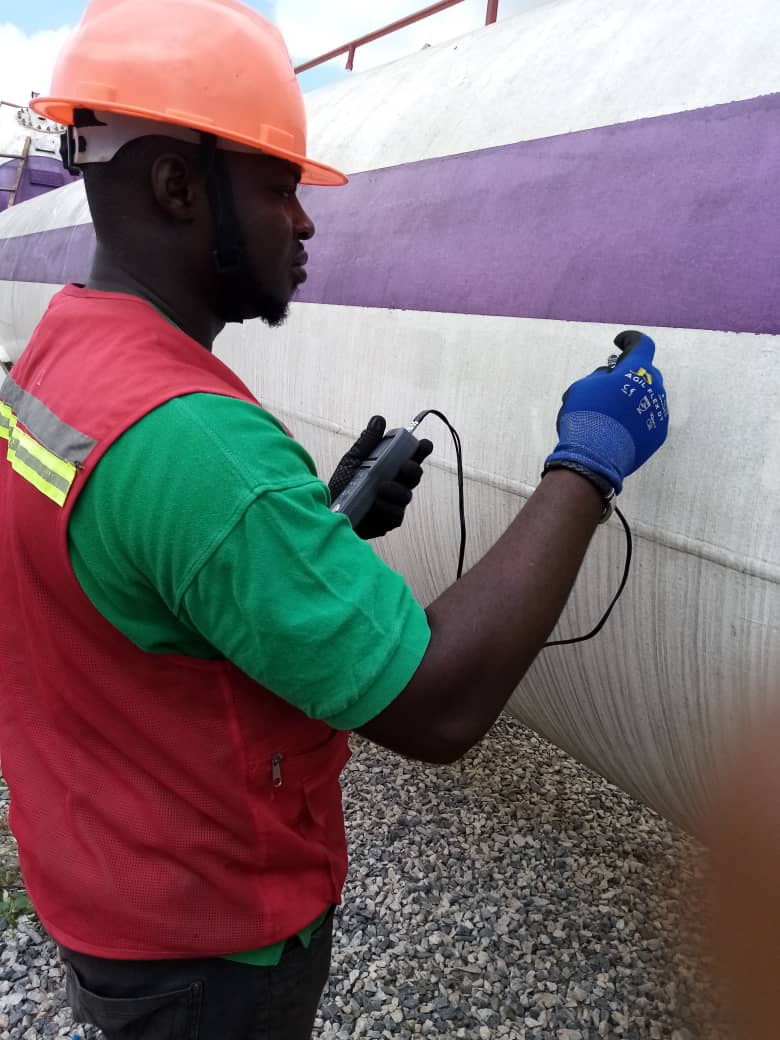
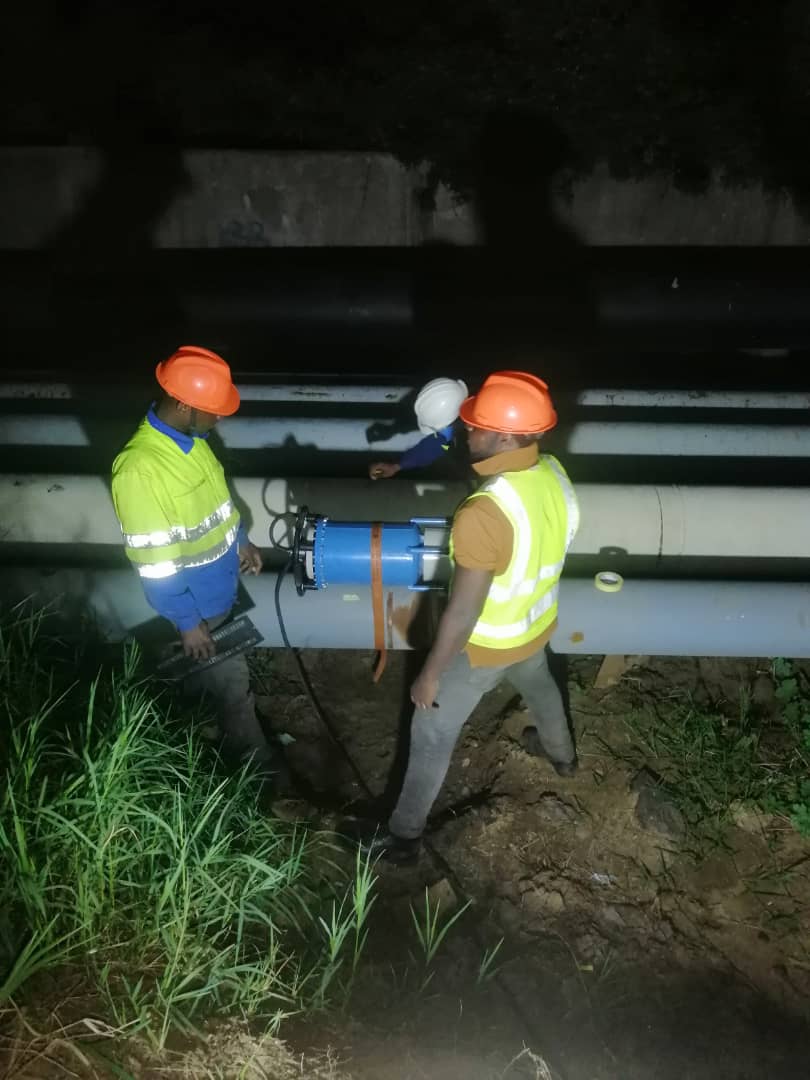
NDT (Non-Destructive Testing) refers to an array of inspection techniques that allow inspectors to collect data about a material without damaging it.
NDT may also be called:
- NDE (non-destructive examination or evaluation)
- NDI (non-destructive inspection)
In the field, NDT is often used as an umbrella term to refer to non-destructive inspection methods, inspection tools, or even the entire field of non-destructive inspections.
For commercial applications—the primary focus of this article, and of our work at Flyability—the goal of NDT is to ensure that critical infrastructure is properly maintained in order to avoid catastrophic accidents.
While NDT methods are typically associated with industrial use cases, like inspecting weak points in a boiler used at an oil refinery, uses in medicine are actually some of the most common. For example, an expecting mother getting an ultrasound to check on the health of her baby would be considered an NDT use case, as would getting an X-ray or MRI to learn more about an injury.

But it’s important to note that NDT does not necessarily require the use of special tools, or any tools at all.
For instance, when inspectors in industrial settings review the outside of a pressure vessel with their naked eye, that would fall under the NDT designation, since they are collecting data on the status of the boiler without damaging it. On the other hand, using a sophisticated tool like an ultrasonic sensor to look for defects in a certain material or asset would also be called NDT.
egardless of the specific use case, the underlying commonality among all these examples is the collection of data in a non-intrusive manner.
Here is a table of contents to help you navigate all the information related to NDT contained within this article:
What Is NDT?
We’ve already covered what NDT stands for and how the phrase is used in the field. Now let’s dive in and look more closely at some of the details that govern the world of NDT.
Destructive vs. Non-Destructive Testing
Before we go any further, we should clarify that there are some methods used to test materials that alter—or even damage and destroy—the materials tested.
The use of these methods is called Destructive Testing.
In Destructive Testing, a piece of the material might be scraped away for analysis or altered in some way onsite.
Here are some examples:
- Macro sectioning. Macro sectioning tests a small section of a welded material by polishing and etching it for examination.
- Tensile testing. Also called tension testing, this is a destructive testing technique that uses controlled tension applied to a sample material to see how it reacts. Tension could be applied to test certain loads or conditions, or to test a material’s failure point.
- 3 point bend testing. 3 point bend testing examines the soundness and flexibility (or ductility) of a material by taking a sample of it, called a coupon, and bending it in three points to a specified angle.
NDT Codes and Standards
NDT techniques can be used for all kinds of inspections. But some of the most important types of NDT inspections are of assets like boilers and pressure vessels, which could be incredibly dangerous if not properly maintained.
Because proper maintenance of these assets is so important for the safety of those working nearby (or even at a distance, when it comes to nuclear power plants), most countries have laws requiring companies to adhere to specific inspection codes and standards when conducting inspections.
These standards and codes typically require inspections to be conducted periodically following specific guidelines. For the most assets that present the greatest risk, these inspections must be both conducted by a certified inspector and approved by a certified witness working for a formal inspection body.
Here are the most commonly followed organizations in the world for creating NDT standards and codes:
- API (American Petroleum Institute)
- ASME (American Society for Mechanical Engineers)
- ASTM (American Society for Testing and Materials)
- ASNT (American Society For Nondestructive Testing)
- COFREND (French Committee for Non-destructive Testing Studies)
- CSA Group (Canadian Standards Association)
- CGSB (Canadian General Standards Board)
Why Use NDT?
Here are the top reasons NDT is used by so many companies throughout the world:
- Savings. The most obvious answer to this question is that NDT is more appealing than destructive testing because it allows the material or object being examined to survive the examination unharmed, thus saving money and resources.
- Safety. NDT is also appealing because almost all NDT techniques (except radiographic testing) are harmless to people.
- Efficiency. NDT methods allow for the thorough and relatively quick evaluation of assets, which can be crucial for ensuring continued safety and performance on a job site.
- Accuracy. NDT methods have been proven accurate and predictable, both qualities you want when it comes to maintenance procedures meant to ensure the safety of personnel and the longevity of equipment.
“Nondestructive testing is the life blood of a well-run facility. NDT techniques and repeatable results depend on highly trained technicians with experience and integrity. Industrial NDT methods and interpretation of results are performed by certified professionals. Not only does the technician need to be certified in a specific NDT method, but they also need to know how to operate the equipment being used to gather data. Understanding equipment capabilities and limitations is the difference between making an accept or reject determination.”